Seth Baum
Home • Bio • Publications
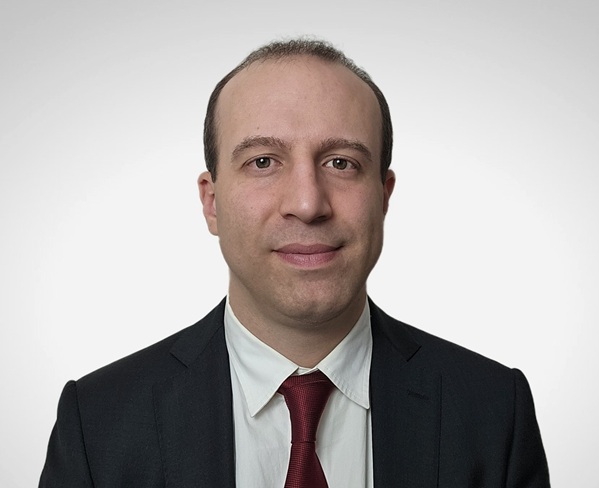
Co-Founder and Executive Director, Global Catastrophic Risk Institute
Contact:
Research inquiries and anything related to GCRI: director [at] gcri.org
Other inquiries: hello [at] sethbaum.com
GREETINGS - JULY 2026
This month, my country, the United States of America, celebrates its 250th birthday. Will it celebrate its 500th?
There are two fundamental threats to the United States. One is extreme catastrophe, the sort of threat that I have spent my career studying: climate change, nuclear war, runaway AI, etc. The other is political regime change, such as via the loss of democracy.
Last year, I was deeply concerned that the 2024 US election and subsequent Trump administration had elevated both threats. I responded in the way that I know best: by applying my talents as an interdisciplinary researcher to study US politics in search of explanations and solutions. I have been publishing my research in the GCRI Series on Democracy and Global Catastrophic Risk.
What I have found is that yes, the Trump administration is a major problem, but many of the issues run much deeper. A lot can be traced to around the 1970s, when US political culture started to become more individualistic, more accepting of inequality and likewise more corrupt, less oriented toward public participation in civic activities, and less supportive of government solutions to social problems. This has substantially weakened democracy while making it more difficult to address many issues, including global catastrophic risk.
One difficult lesson has been that my own career has, in some respects, contributed to the decline of democracy. As a risk and policy expert, I am part of a professional community that frequently provides technical analysis to inform government decision-making. It is important to have well-informed policy, and my colleagues and I have made many valuable contributions. However, for the most part, we have done so in a manner that seeks to provide politically neutral input directly to government officials. This cuts ordinary citizens out of the policy process and fails to build the political muscle needed to push back when government officials go wrong.
The solution is to contribute to organizing and mobilizing citizens to fight for positive policy change. This strengthens democracy by decentralizing political power away from insider elites and toward the general public. It can also improve policy outcomes by supporting the election of better politicians, pushing them to vote for better policies, and creating the civic infrastructure needed to implement the policies. The quality of the outcomes will depend on what citizens are fighting for, which can be informed by technical expertise.
History has shown that citizen advocacy works. In the 1980s, citizens across the country organized to advocate for nuclear arms control and improved relations with the Soviet Union. This helped to the end the Cold War and may have even prevented large-scale nuclear war. In the 2010s, climate policy advocates fell short when pursuing a narrow insider strategy but then succeeded after engaging the grassroots. Today, public opposition to data centers is shifting policy and hurting AI company business models. All of that is good; an example of harmful citizen advocacy is opposition to nuclear power, which is rooted in misperceptions about the risks of different energy sources.
While the US today lacks the same culture of civic participation that we had in earlier eras, it hasn’t totally died and there are plenty of opportunities to regrow it. This would strengthen democracy and, if channeled constructively, help on a lot of important policy issues, including global catastrophic risk. It would put the US on a path toward eventually celebrating its 500th birthday.
RECENT WORK
Democracy and Global Catastrophic Risk
Ongoing research, 2025-2026
My interest is in strengthening democracy and improving living conditions for ordinary Americans while addressing global catastrophic risk. To that end, I am diving into research literature in political science and related topics, which I'm using to write a series of articles:
• Political organizing and global catastrophic risk, July 2026, on the political sociology of how citizens come together to build political power to advance policy change
• Evidence on democratic participation and global catastrophic risk, June 2026, on the historical track record of policy advocacy with vs. without significant citizen participation
• Political corruption and global catastrophic risk, May 2026, on the potential for moneyed interests to thwart positive policy and the means of pushing back against this
• Political orders and global catastrophic risk, February 2026, on the New Deal, neoliberalism, and what comes next - I propose it should be "democratic welfarism"
• The importance of statusquotastrophe—and social science research, January 2026, on research finding that many Americans believe the status quo to already be catastrophic
• Government procedure and global catastrophic risk, October 2025, on how governments make decisions, including a critiqe of "abundance"
• Democratic participation and global catastrophic risk, April 2025, on the historical decline of public participation and my own uncomfortable role
Catastrophic Risks from AI
Ongoing research, 2024-2026
The risk of AI taking over the world and killing everyone has long been a subject of speculative, theoretical research - research I have contributed to since 2011. However, the rise of large language models has raised concerns that takeover may be imminent. My risk analysis finds this to be unlikely, but there is some worrying uncertainty, along with other concerns about AI.
• Reflections on mid-2026 AI-cyber risk and governance, July 2026: a commentary article discussing recent AI cybersecurity incidents and US policy responses
• AI risk and strategy, early 2026, April 2026: a commentary article documenting mixed progress over the past year of AI and articulating a strategy that accounts for difficult political realities in the US
• Parsing AI risk in early 2025, April 2025: a commentary article observing the sharply diverging expert opinions and expressing skepticism due to the "bags of heuristics" theory of how LLMs work
• Assessing the risk of takeover catastrophe from large language models, July 2024: a research paper in the journal Risk Analysis developing a seven-part framework for assessing takeover risk, finding that current LLMs fell short across all seven
War and Peace
Assorted commentaries and a symposium, February-March 2026
Tragically, active wars are causing death and destruction in multiple locations around the world. My work is assessing the implications for global catastrophic risk and exploring opportunities for advancing peace. If we could somehow improve relations between rival countries, that could help solve a range of global challenges, including war and other catastrophic risks.
• The GCRI Symposium on World Peace, March 2026: a collection of articles from distinguished experts on the merits of pursuing world peace and practical options for doing so
• The Iran war and global catastrophic risk, March 2026: a dark lesson in tragically bad high-stakes decision-making, with implications for nuclear proliferation, AI, and climate change
• Ukraine and nuclear war, 2026, February 2026: the risk of nuclear escalation may seem low, but there are warning signs of potential change
Militaries and Catastrophic Risks
The Complex Relationship Between Militaries and Global Catastrophic Risk, a research report, August 2026
This report surveys the full range of effects that militaries can have on global catastrophic risk. Militaries are tasked with the use of large-scale violent force, but their effects cover much more, including technology research and development, environmental impacts, outer space, and catastrophe management. The report is co-authored with four colleagues with deep backgrounds in military affairs and international security.
The Ethics of Outer Space
Earth-Cosmos Binary, a research paper in the journal Futures, April 2026
This is a sketch of an answer to the biggest question in the universe. It pertains to high-stakes future scenarios in which humanity gains the capacity to radically alter the cosmos as we see fit. The Earth-Cosmos Binary would conserve Earth and vicinity in roughly its current condition while radically altering the rest of the cosmos in some morally desirable way.
EARLIER WORK
The Risk of Nuclear War
Nuclear war doesn't garner the same attention it did at the height of the Cold War, but the weapons are still around and the countries that have them still don't get along with each other. The risk of nuclear war is not zero, but what exactly is it? Together with colleagues at GCRI, I have helped to characterize both the probability of nuclear war occurring and the severity of the harms if it does.
• A model for the probability of nuclear war, 2018, a GCRI report, covering 14 nuclear scenarios and 60 historical incidents such as the Cuban Missile Crisis and the Duluth-Volk bear incident
• A model for the impacts of nuclear war, 2018, a GCRI report, covering the five main effects of nuclear detonations: thermal radiation, blast, ionizing radiation, electromagnetic pulse, and human perceptions
• Analyzing and reducing the risks of inadvertent nuclear war between the United States and Russia, 2013, in Science and Global Security, modeling the risk of nuclear war from a false alarm mistaken as a real attack
The Risk of AI Takeover Catastrophe
Long before AI became a major public concern, a small community of experts studied the possibility of future AI effectively taking over the world and killing everyone. I contributed research that used rigorous risk analysis techniques despite the highly uncertain and speculative nature of the topic.
• A survey of artificial general intelligence projects for ethics, risk, and policy, 2017, and a 2020 follow-up, both GCRI reports, mapping the global landscape of projects seeking to develop AGI
• A model of pathways to artificial superintelligence catastrophe for risk and decision analysis, 2017, in Journal of Experimental & Theoretical Artificial Intelligence, presenting the ASI-PATH model of catastrophe from recursively self-improving AI
• How long until human-level AI? Results from an expert assessment, 2011, in Technological Forecasting & Social Change, documenting widely varying expert projections about the future of advanced AI technology
Post-Catastrophe Survival
In the aftermath of a global catastrophe, what are the prospects for survivors? And what can we do now, pre-catastrophe, to help them? This is a dark topic to contemplate, but it could be the difference between civilization recovering or perishing. I've contributed frameworks for analyzing post-catastrophe trajectories and analysis of survival options.
• Pandemic refuges: Lessons from two years of COVID-19, 2023, in Risk Analysis, on how China and Western Australia have demostrated that refuges can protect populations during pandemics
• Long-term trajectories of human civilization, 2019, in Foresight, relating post-catastrophe conditions and other factors to the future of human civilization millions, billions, or trillions of years into the future
• Isolated refuges for surviving global catastrophes, 2015, in Futures, developing design criteria for successful survival refuges, such as surface independence, food provision, and subterranean waste heat rejection
• Resilience to global food supply catastrophes, 2015, in Environment, Systems, and Decisions, discussing options to keep human civilization alive and well if a catastrophe devastates global food production
• Adaptation to and recovery from global catastrophe, 2013, in Sustainability, on the potential for human survivors to adapt to post-catastrophe conditions and eventually recover
Interconnections Between Global Catastrophic Risks
It is common to treat each global catastrophic risk in isolation, but this ignores important ways in which the risks are connected to each other. There can be connections between the risks themselves, such as when one catastrophe triggers another, and within solutions, such as when one solution addresses multiple risks at the same time. My research has championed an integrated, systems analysis approach to the study of global catastrophic risk.
• Risk-risk tradeoff analysis of nuclear explosives for asteroid deflection, 2019, in Risk Analysis, assessing whether nuclear deflection programs would reduce the risk of asteroid collision more than they increase the risk of violent conflict
• Evaluating future nanotechnology: The net societal impacts of atomically precise manufacturing, 2018, in Futures, assessing the merits of APM in terms of general material wealth, environmental issues, military affairs, surveillance, AI, and space travel
• Double catastrophe: Intermittent stratospheric geoengineering induced by societal collapse, 2013, in Environment, Systems and Decisions, analyzing a global catastrophe scenario in which a climate geoengineering catastrophe is triggered by a separate catastrophe such as a nuclear war or pandemic
Strategy for Addressing Global Catastrophic Risk
No one wants global catastrophe, but how can we get people to actually address the risk? In the research literature, concern about global catastrophic risk often appeals to big-picture, universal moral principles, but ordinary citizens and policy-makers alike are often focused on more immediate issues. My research explores strategies for overcoming this to yield solutions that can, in practice, actually reduce the risk.
• Reconciliation between factions focused on near-term and long-term artificial intelligence, 2018, in AI & Society, calling for less disagreement and more collaboration between people who care about different aspects of safe and ethical AI
• The far future argument for confronting catastrophic threats to humanity: Practical significance and alternatives, 2015, in Futures, arguing for an emphasis on the concerns of real-world catastrophic risk decision-makers instead of theoretical arguments about the future
• Winter-safe deterrence: The risk of nuclear winter and its challenge to deterrence, 2015, in Contemporary Security Policy, exploring alternatives to large-scale nuclear deterrence to avoid nuclear winter and other global catastrophic risks
AI Governance
How does society ensure that AI technology is safe and used responsibly so as to benefit the public? This is not a trivial matter in the face of corporate profit-seeking, geopolitical rivalry, and AI scientists who just want to build something that works. My AI governance research has leveraged my interdisciplinary background, applying lessons from related fields.
• Corporate governance of artificial intelligence in the public interest, 2021, in Information, on how nine different types of actors, both inside and outside the company, can orient corporate AI activities toward the public interest, even in the face of countervailing profit incentives
• Collective action on artificial intelligence: A primer and review, 2021, in Technology in Society, drawing on the social science of collective action to address scenarios such as dangerous races to build advanced AI
• On the promotion of safe and socially beneficial artificial intelligence, 2017, in AI & Society, drawing on social psychology research to address how to motivate AI researchers to choose socially beneficial designs
AI Ethics
AI raises distinctive ethical issues due to the potential effects of the technology and the need to build ethical frameworks into some AI systems. My AI ethics research draws on my environmental ethics background to critique some prominent approaches to AI ethics.
• Manipulating aggregate societal values to bias AI social choice ethics, 2025, in AI and Ethics, raising concern that the ethics in some AI systems could be manipulated in ways similar to the manipulation of voting schemes in democracy
• Moral consideration of nonhumans in the ethics of artificial intelligence, 2021, in AI & Ethics, calling out the field of AI ethics for widespread neglect of the status of nonhumans
• Social choice ethics in artificial intelligence, 2020, in AI & Society, critiquing proposals for AI to follow society's aggregate ethical views due to difficult and important questions about how to define society
Ethical Theory & Environmental Ethics
Policy and other decision-making ultimately rests on a foundation of ethics. Ethical theories can guide what we are supposed to do. My research has made some contributions to fundamental ethical theory, with an emphasis on environmental ethics.
• On the intrinsic value of diversity, forthcoming, in Inquiry, a foundational study of the ethics of diversity, covering the entire category of diversity instead of the usual focus on social and biological diversity
• Nonhuman value: A survey of the intrinsic valuation of natural and artificial nonhuman entities, 2022, in Science and Engineering Ethics, a detailed survey of the many ways in which nonhumans can be morally valuable for their own sake
• Value typology in cost-benefit analysis, 2012, in Environmental Values, exploring the types of values held by costs and benefits strengthens our understanding of existing CBAs and suggests new innovations in CBA design
• Description, prescription and the choice of discount rates, 2009, in Ecological Economics, an analysis of ethical judgments in descriptions of how society discounts as used in the economics of climate change
Methodology for Analyzing Global Catastrophic Risks
How large is the risk of global catastrophe? This simple question is remarkably difficult to answer due to the lack of prior event data and the complexity of the risks. My methodology research has developed approaches to handling the extreme uncertainty surrounding global catastrophic risks by using the lack of available information for all it's worth.
• Climate change, uncertainty, and global catastrophic risk, 2024, in Futures, using the concept of a global catastrophe threshold to relate uncertainty to whether climate change should be classified as a global catastrophic risk
• Assessing natural global catastrophic risks, 2023, in Natural Hazards, revisiting the deep history of human civilization to argue that the risk of global catastrophe from natural origins may be larger than prior studies have estimated
• Quantifying the probability of existential catastrophe: A reply to Beard et al., 2020, in Futures, finding that the best methods for quantifying existential risk are also the most difficult to implement
• Uncertain human consequences in asteroid risk analysis and the global catastrophe threshold, 2018, in Natural Hazards, showing that although asteroid collision is the most well understood global catastrophic risk, it still has high uncertainty
• Integrating the planetary boundaries and global catastrophic risk paradigms, 2014, in Ecological Economics, critiquing the planetary boundaries framework and proposing a new framework for analyzing global threats to humanity and nature
Extraterrestrial Civilization
Are we alone in the universe? And if not, what would happen if we encounter a civilization from somewhere else? Back in grad school, I was friends with some astrobiologists; we had a good time addressing these questions.
• Would contact with extraterrestrials benefit or harm humanity? A scenario analysis, 2011, in Acta Astronautica, exploring a broad range of possible contact scenarios in terms of their impact on humanity; the paper received extensive media coverage
• Universalist ethics in extraterrestrial encounter, 2010, in Acta Astronautica, assessing how an encounter may play out if each civilization values each other equally
• The 'Sustainability Solution' to the Fermi Paradox, 2009, in Journal of the British Interplanetary Society, proposing that the challenges of sustainability may explain why we have never observed an extraterrestrial civilization